Flagship study
AuraVerifyAI
A flagship cybersecurity product experience spanning media intake, evidence-oriented reporting and a Trust Engine concept for identity, voice, deepfake, fraud and interaction risk.
- Role
- Founder, product direction and technical delivery
- Year
- 2026
- Status
- BETA
- Technologies
- React, TypeScript, Vite, Tailwind, Supabase, PostgreSQL, Deno edge functions, AI-assisted screening
About this project
This record separates implemented work, demonstrated product flows and capabilities still in development.
Problem
Digital media verification needs a clear trail of evidence, limitations and next actions rather than a single unexplained score.
Approach
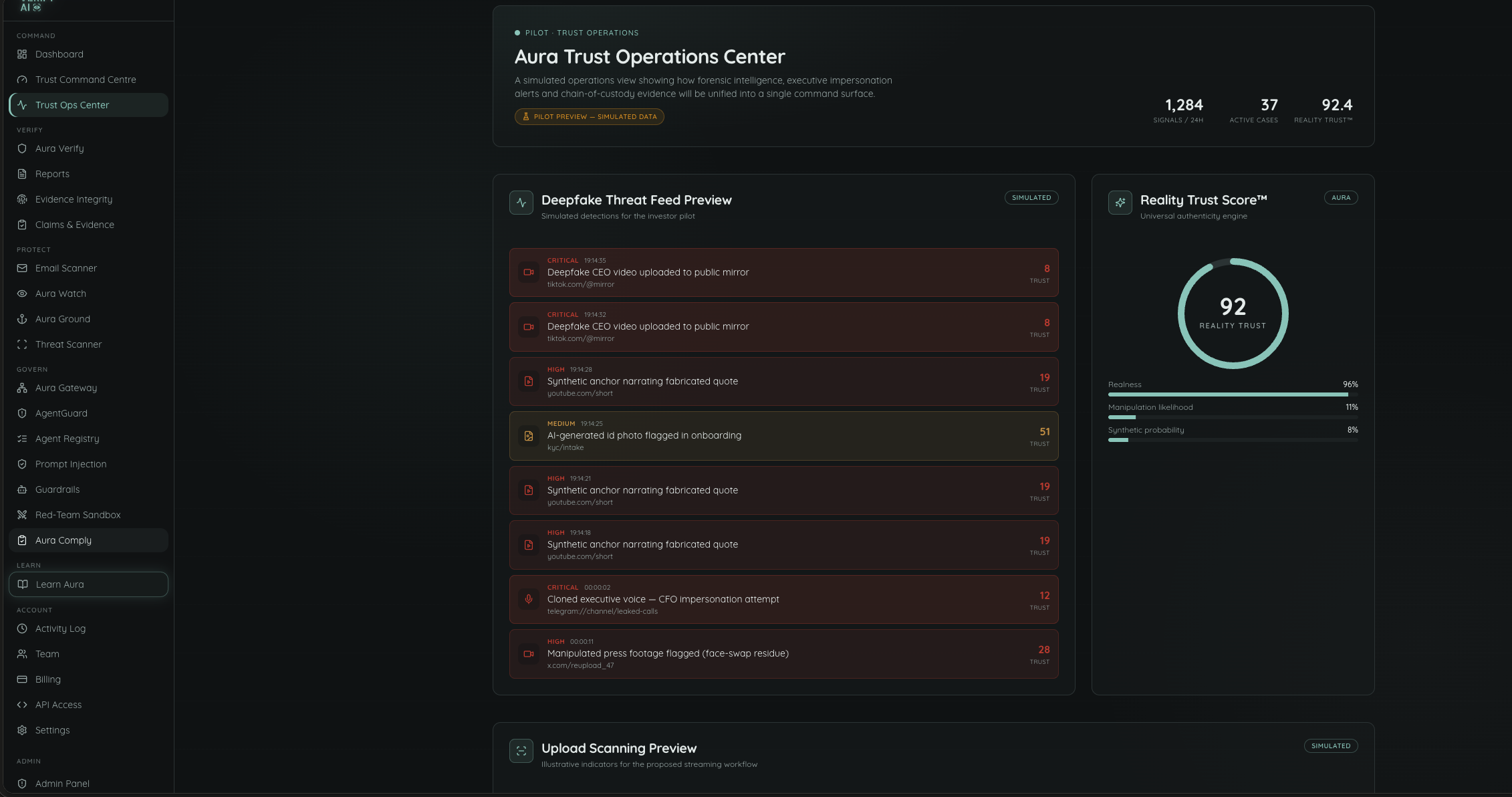
The product combines an authenticated workspace, media-input flow, stored reports, evidence trace and Trust Engine presentations. Trust scenarios are labelled as simulated demonstrations where they use fixtures.
Architecture
React and TypeScript interfaces connect to Supabase authentication and storage, PostgreSQL-backed records, Deno edge functions, media metadata and hashing, AI-assisted screening, report persistence and signed previews.
Challenges
The interface has to communicate uncertainty honestly. Unsupported or inconclusive media must stay distinguishable from a conclusive authenticity result, and roadmap capabilities must remain separate from implemented source paths.
Outcomes
The current evidence demonstrates the dashboard, verification boundary, persisted report, provenance trace, Trust Engine transitions, investigation view and capability map. The premium showcase now brings those product surfaces together in one focused walkthrough; accuracy, production readiness and deployment parity are not claimed from screenshots alone.
Integrations
- Supabase authentication and storage
- PostgreSQL records
- Deno edge functions
- AI gateway
- Report and evidence workflows
Project evidence